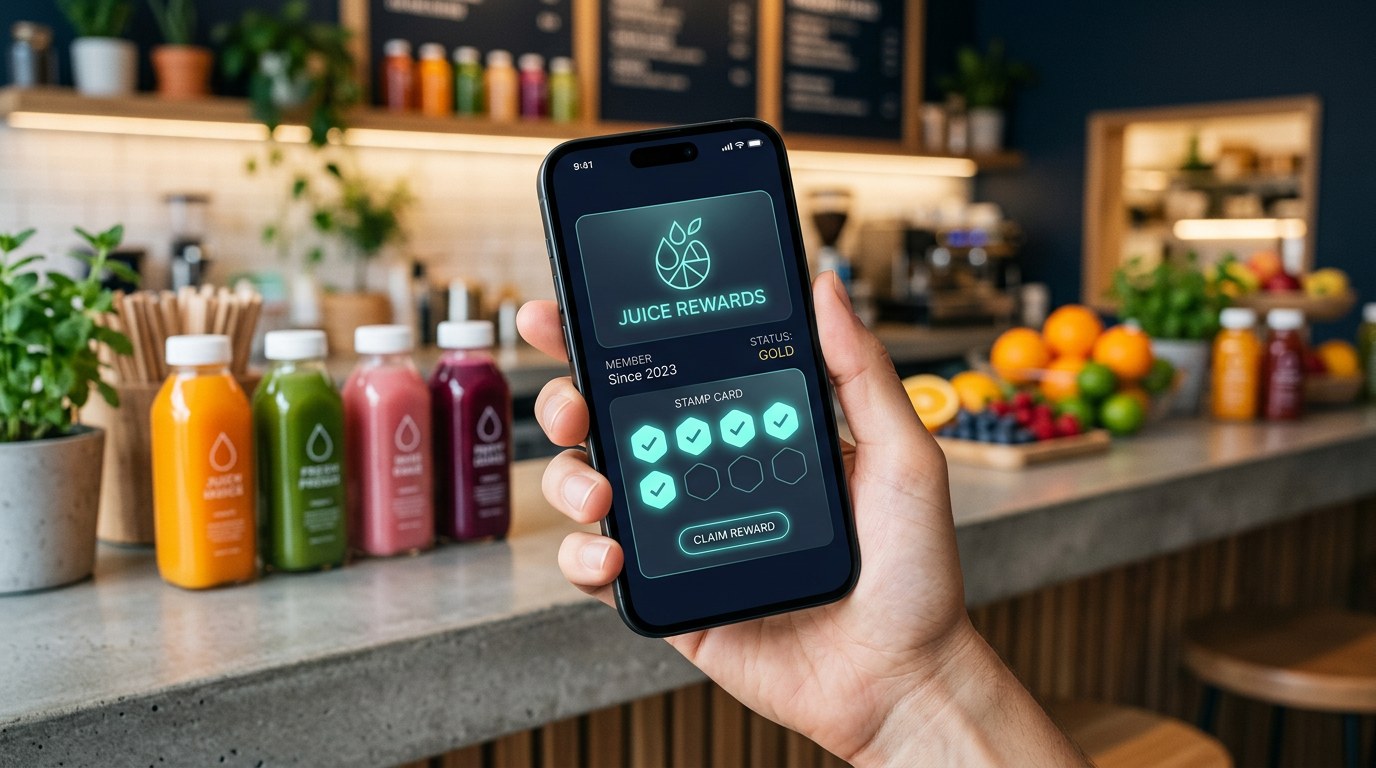
Walk past any juice bar in Dubai at 8am in August and you'll see the strange economics of the business: a queue of regulars who come almost every day — and almost none of them are on a juice bar loyalty program. The coffee chains next door figured this out years ago. They know a daily habit is the most valuable thing in retail, so they wrapped it in stamps, apps, and rewards until switching felt like losing something. Juice bars have the same daily habit sitting in front of them — the post-gym smoothie, the office green juice, the school-run orange — and most of them are still handing out paper punch cards that die in the wash.
That's the whole opportunity. Not inventing a habit — protecting one that already exists.
Why a Juice Bar Loyalty Program Works Harder Than Almost Any Other
Loyalty programs live or die on visit frequency, and juice is one of the highest-frequency purchases there is. A customer who buys a juice three times a week makes over 150 visits a year. Compare that to a salon customer at twelve visits or a hotel guest at two. Every mechanic in the loyalty toolbox — stamps, streaks, rewards, nudges — compounds faster when the visits come this often.
Frequency cuts the other way too. A habit that forms in two weeks can dissolve in two weeks. Your regular tries the new place near their office, or the gym schedule changes, or summer travel breaks the routine — and a customer worth thousands of dirhams a year quietly disappears. Nobody notices, because nobody was counting. A loyalty card that lives on their phone is how you start counting.
The Paper Punch Card Was Built for a Different Business
Most juice bars that do run a program run it on card stock. For a business selling cold liquid to people in gym clothes, paper is about the worst possible material: cards get soggy, lost in totes, or left in the other bag. Industry rule of thumb says most paper punch cards are abandoned before completion — not because the customer stopped coming, but because the card stopped being there when they did.
The fix is to put the card where the customer already is. With Wally, your stamp card lives in Apple Wallet or Google Wallet. A customer scans a QR code at the counter — while the blender is running is the perfect ten seconds — taps "Add to Wallet," and they're in. No app to download, no form beyond a name, no plastic, no paper. Every visit after that is one scan, and the stamp appears on their phone instantly. If you're weighing formats, a digital stamp card is almost always right for juice: same purchase, high frequency, simple promise — buy nine, the tenth is free.
Design the Card Around the Habit, Not the Discount
A juice bar loyalty program shouldn't feel like couponing. It should feel like the shop knows you. A few rules that work:
Keep the first reward close. A ten-stamp card with a free juice at the end is fine, but a small win early — a free booster shot or size upgrade at stamp three — is what convinces a new customer the card is real. Progress people can feel beats generosity they have to wait for.
Put your packages on the pass. Cleanse programs and 10-pack juice bundles are prepaid revenue, and tracking them on paper is asking for disputes. On a wallet pass, the package sits next to the stamp card: "7 of 10 juices remaining," updated with every scan. Customers trust the count because they can see it.
Use quiet hours. Every juice bar has a dead stretch — usually mid-afternoon. Double stamps from 2–5pm moves flexible regulars into the hours your blenders sit idle, at close to zero real cost.
The Lock Screen Is Your Comeback Channel
Here's what paper can never do: notice absence. A wallet pass can. When a three-times-a-week regular hasn't scanned in ten days, that's not noise — that's a habit breaking in real time. A short lock-screen message — "Your ninth stamp is waiting. One juice to go." — lands exactly where they'll see it, costs you nothing per message, and goes only to people who opted in by adding your card. These wallet push notifications routinely out-perform email for one simple reason: people actually see them.
Seasonality makes this matter more in the UAE. Summer scatters your regulars; September is when routines re-form — with whoever shows up first. A scheduled "welcome back — double stamps this week" note the first week of September is the cheapest customer-recovery campaign you'll ever run. The same playbook that helps cafes and restaurants beat the UAE summer slump works juice-side, with one difference in your favour: August heat is juice season. While footfall drops elsewhere, yours can peak — which makes summer the best possible moment to get cards into wallets.
What to Watch Once It's Running
Three numbers tell you whether the program is working. Join rate: of the customers offered the card, how many add it — at the counter with a QR by the register, 40%+ is realistic. Repeat-visit rate: whether cardholders come back more often than they did before. And redemption: completed cards are not a cost, they're proof — every free tenth juice was preceded by nine paid visits that had a reason to happen at your counter instead of the one across the road. Restaurants and cafes running wallet-based programs see the same pattern; the mechanics are identical to any food and beverage loyalty program, just on a faster clock.
The juice habit already exists. The queue already forms. The only question is whether the habit is attached to your shop — or just to juice.
Ready to put your stamp card in your customers' wallets? Book a quick demo with Wally — your juice bar loyalty program goes into Apple Wallet and Google Wallet, customers join in one scan at the counter, and stamps, packages, and comeback nudges all run from the same pass.